Genuine vs Third-Party Toner: What Actually Happens
Third-party toner costs a fraction of what the manufacturer charges, and the question every office eventually asks is whether that saving is real or whether it comes back as a repair bill. We should say up front that we supply toner, so we have an interest in this answer. We are going to give you the honest version anyway, because the sales pitch version is wrong in both directions. Cheap toner does not automatically wreck a copier, and it does not automatically void your warranty either. The risks are specific, identifiable, and worth understanding before you decide.
Three categories, not two
People say “genuine or cheap”, but there are actually three things on the market and they behave differently.
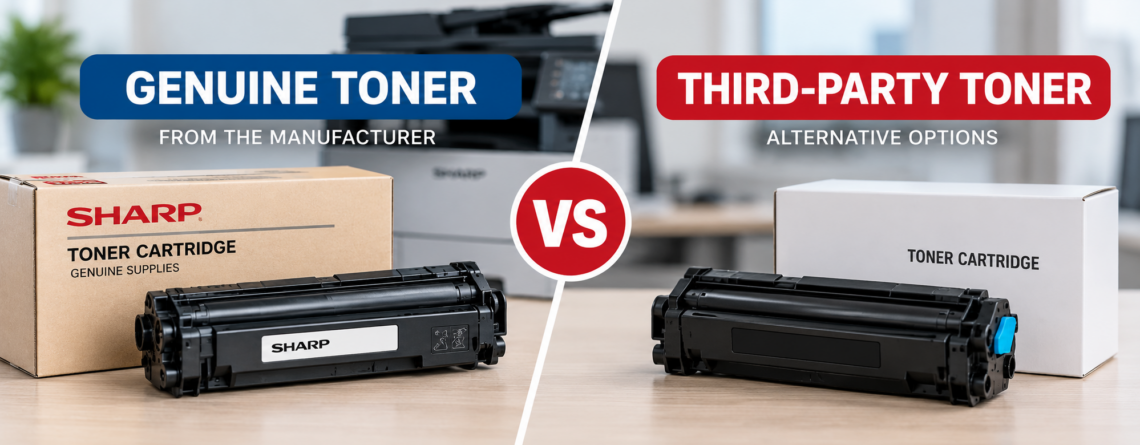
OEM is manufactured by or for the brand on your machine. The toner chemistry is matched to that engine’s fuser temperature and drum.
Remanufactured is a used OEM shell that has been cleaned, had worn parts replaced, and been refilled. Quality depends almost entirely on how carefully that process was done. A good remanufacturer tests and replaces wear components; a bad one just refills and reseals.
New-build compatible is a newly manufactured cartridge made by a third party to fit your machine. These are not recycled, and quality ranges from genuinely good to very poor depending on the maker.
Lumping the second and third together as “compatible” hides the fact that a well-made remanufactured cartridge from a serious supplier and an unbranded new-build from a marketplace listing are not remotely the same product.
Where the real risk sits
Toner is not a generic powder. It is engineered for a specific engine, and the properties that matter are measurable.
Melting point. The fuser applies a set temperature. Toner formulated to melt at a different point either fails to bond properly, giving output that smudges or rubs off, or it melts too readily and begins depositing on the fuser sleeve.
Particle size and consistency. Inconsistent particle size produces uneven density and background dirt on the page, and finer-than-designed particles escape past seals into the machine.
Electrostatic behaviour. The imaging process depends on charge. Toner that holds charge differently transfers unevenly, which shows as patchy fill or ghosting.
Build quality of the shell. This is the one that actually causes damage. A cartridge that leaks puts loose toner into the paper path, onto the transfer roller, and eventually into the fuser.
Industry documentation is reasonably blunt about the variability. Some compatible cartridges are of similar quality to their OEM equivalents, and many are not, which is exactly why the brand of the cartridge matters more than the category it belongs to.
What we actually see on service calls
This is not theory. These are the faults that bring us out, and they cluster:
- Loose toner inside the machine from a leaking cartridge, which contaminates the transfer roller and the paper path and produces smearing that cleaning alone will not fix
- Waste toner filling far faster than expected, because excess toner is not transferring cleanly
- Background dirt and inconsistent density that people initially report as a drum problem
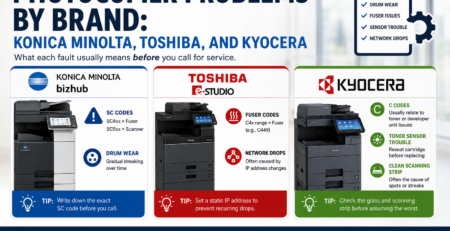
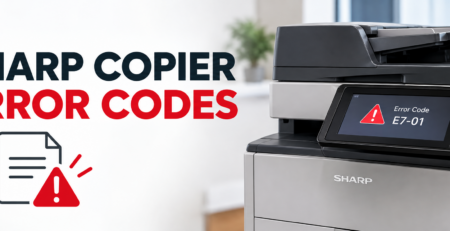
- Chip and recognition faults, where the machine will not accept the cartridge or reports it empty when it is not. On Sharp machines this shows up in the U2 code family, which we cover in our guide to Sharp copier error codes
- Fuser contamination, which is the expensive one, and the end point of a leak that was left running
What we do not see often is a cartridge instantly destroying a machine. The damage pattern is cumulative. A cartridge leaks slightly, nobody notices, the next one leaks too, and six months later the fuser needs replacing.
Your warranty is not automatically void
This is the part most dealers leave out, and it is worth knowing because it is federal law.
Under the Magnuson-Moss Warranty Act, specifically the tie-in sales provision at 15 U.S.C. §2302(c), a company offering a written warranty cannot condition that warranty on your using a particular brand of part, unless it supplies that part free of charge. In plain terms, a manufacturer cannot void your warranty simply because you used someone else’s toner.
The exception is narrower than compatible sellers sometimes suggest. A manufacturer can decline to cover a specific repair if it can show that the third-party cartridge actually caused that specific damage. If a cartridge leaked and the fuser failed as a result, that repair can reasonably be refused. The rest of the warranty remains in force, and the burden of showing causation sits with the warrantor.
Note also the difference in wording. Warranty documents often say they do not cover damage caused by non-brand supplies, which is a different statement from saying the warranty is void. The first is normal and lawful. The second is not.
The same logic applies to service contracts, though a contract is a private agreement rather than a warranty, so read what yours actually says about supplies. Our guide to copier preventive maintenance covers the other clauses worth checking.
Print quality gone off since you switched toner?
Effiservice services copiers and printers across Orange County on all the major brands. We will tell you whether what you are seeing is the cartridge, the drum, or something else, rather than assuming the cheapest explanation.
Prefer to book online? Visit our Orange County copier repair page or contact us here.
When third-party makes sense
We are not going to tell you never to buy it. There are situations where it is a perfectly sensible decision.
- Low-volume desktop printers where the machine is cheap to replace and the work is not critical
- Internal documents — drafts, file copies, anything nobody outside the office will see
- Older machines already past the point of being worth significant repair, where you are running the machine out
- Where you have a supplier you have tested over time and the results have been consistent
When it is a false economy
- High-volume production machines. The more pages you run, the faster a marginal cartridge accumulates problems, and the more expensive the parts it damages
- Anything client-facing. Proposals, invoices, and marketing material that smudge or print unevenly cost more in impression than the cartridge saved
- Colour work where accuracy matters. Third-party colour sets frequently do not match OEM colour profiles, so your output no longer looks like it did
- Machines under a service contract. Check the contract first. Many build their per-page rate on the assumption of OEM supplies, and using others can affect coverage
- Business-critical devices where a day of downtime costs more than a year of cartridge savings
The arithmetic nobody does
The comparison people make is cartridge against cartridge. That is the wrong comparison.
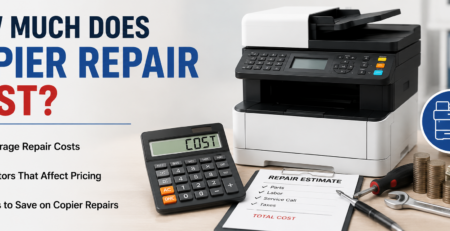
A single copier repair typically runs $350 to $800 in parts and labour without a service contract, and fuser or drum replacements sit at the upper end, commonly $200 to $500 for the part alone. Our breakdown of copier repair costs sets those out in detail.
Against that, suppose a third-party cartridge saves you $80 and you buy twelve a year. That is $960 saved. One leaked cartridge that contaminates a fuser wipes out most of a year’s saving, and that is before counting the hours the machine was down.
This does not mean third-party always loses that bet. It means the bet is being made, usually without anyone realising, and the odds depend entirely on the quality of the supplier rather than on the price.
If you are going to use it, reduce the risk
- Buy from one supplier you can hold accountable, not whichever marketplace listing is cheapest this month
- Prefer remanufactured from a serious remanufacturer over unbranded new-build, since a good reman process replaces worn parts rather than just refilling
- Test on one machine first before switching a whole fleet
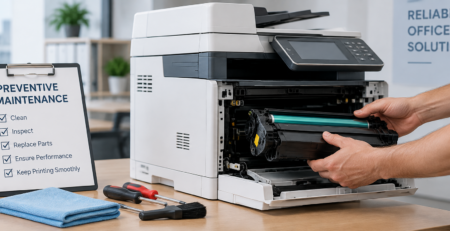
- Inspect on installation. Loose toner on the outside of a new cartridge, a poorly fitting shell, or a broken seal means do not install it
- Stop at the first sign of a leak. Toner dust inside the machine or on the output is the point to stop printing, not the point to carry on and see
- Keep the packaging and records of brand and purchase date, which matters if you later need to attribute a fault
- Do not mix OEM and third-party across a colour set, since the colour profiles will not agree
If supplies are a recurring headache rather than a one-off decision, a managed print programme folds toner into a per-page rate, which removes the choice and the rush orders at the same time. Our guide to common copier problems covers the quality faults that turn out not to be the toner at all.
We work with offices throughout Orange County, including Irvine, Anaheim, Santa Ana, Huntington Beach, and Garden Grove, on mixed fleets and on equipment bought elsewhere. If print quality has changed since you switched supplies, that is usually diagnosable in one visit.
Genuine vs Third-Party Toner FAQ
Does third-party toner void my printer warranty?
No, not automatically. Under the Magnuson-Moss Warranty Act, the tie-in sales provision at 15 U.S.C. §2302(c), a warrantor cannot condition a written warranty on your using a particular brand of part unless it supplies that part free. A manufacturer can still decline a specific repair if it shows the cartridge actually caused that specific damage, but the rest of the warranty stays in force.
What is the difference between remanufactured and compatible toner?
Remanufactured is a used OEM cartridge shell that has been cleaned, had worn parts replaced, and been refilled. New-build compatible is a newly manufactured cartridge made by a third party. A careful remanufacturer replaces wear components and tests; a poor one simply refills. They are different products and should not be judged as one category.
Can cheap toner actually damage a copier?
Yes, though rarely all at once. The damage pattern is cumulative. A cartridge that leaks puts loose toner into the paper path and onto the transfer roller, and if left running it eventually reaches the fuser. Toner formulated for a different melting point can also deposit on the fuser sleeve over time.
Why did my print quality change after switching toner?
Usually particle size, electrostatic behaviour, or melting point. Inconsistent particle size gives uneven density and background dirt. Toner that holds charge differently transfers patchily. Toner that does not melt at the right temperature produces output that smudges or rubs off the page.
My copier says the cartridge is empty when it is not. Why?
That is usually a chip or recognition fault rather than a toner level problem. Third-party cartridges use reprogrammed chips that do not always report correctly to the machine, and some firmware versions reject them outright. On Sharp machines this commonly appears in the U2 code family.
Is third-party toner ever a reasonable choice?
Yes. On low-volume desktop printers, for internal documents nobody outside the office sees, on older machines you are running out rather than maintaining, and where you have a supplier whose results you have tested over time. The decision is about the machine and the work, not about ideology.
When should we definitely stay with genuine toner?
High-volume production machines, anything client-facing, colour work where accuracy matters, business-critical devices where downtime is expensive, and machines under a service contract whose terms assume OEM supplies. In those cases the saving is small relative to what it puts at risk.
Does using third-party toner affect our service contract?
It can, and this is separate from warranty law. A service contract is a private agreement rather than a statutory warranty, so the terms govern. Many per-page contracts are priced on the assumption of OEM supplies. Read what yours says about consumables before switching.
How do we reduce the risk if we use third-party toner?
Buy from one supplier you can hold accountable rather than the cheapest listing each time, prefer a serious remanufacturer over unbranded new-build, test on one machine before switching a fleet, inspect each cartridge on installation, stop printing at the first sign of a leak, and keep records of brand and purchase date.
Can you tell whether our print problem is the toner?
Usually yes, in one visit. Toner-related faults have a recognisable signature, and plenty of problems blamed on cartridges turn out to be a worn drum, a dirty transfer roller, or damp paper. We service all the major brands across Orange County. Call 714-331-5509.